
22 апреля 2026 г.


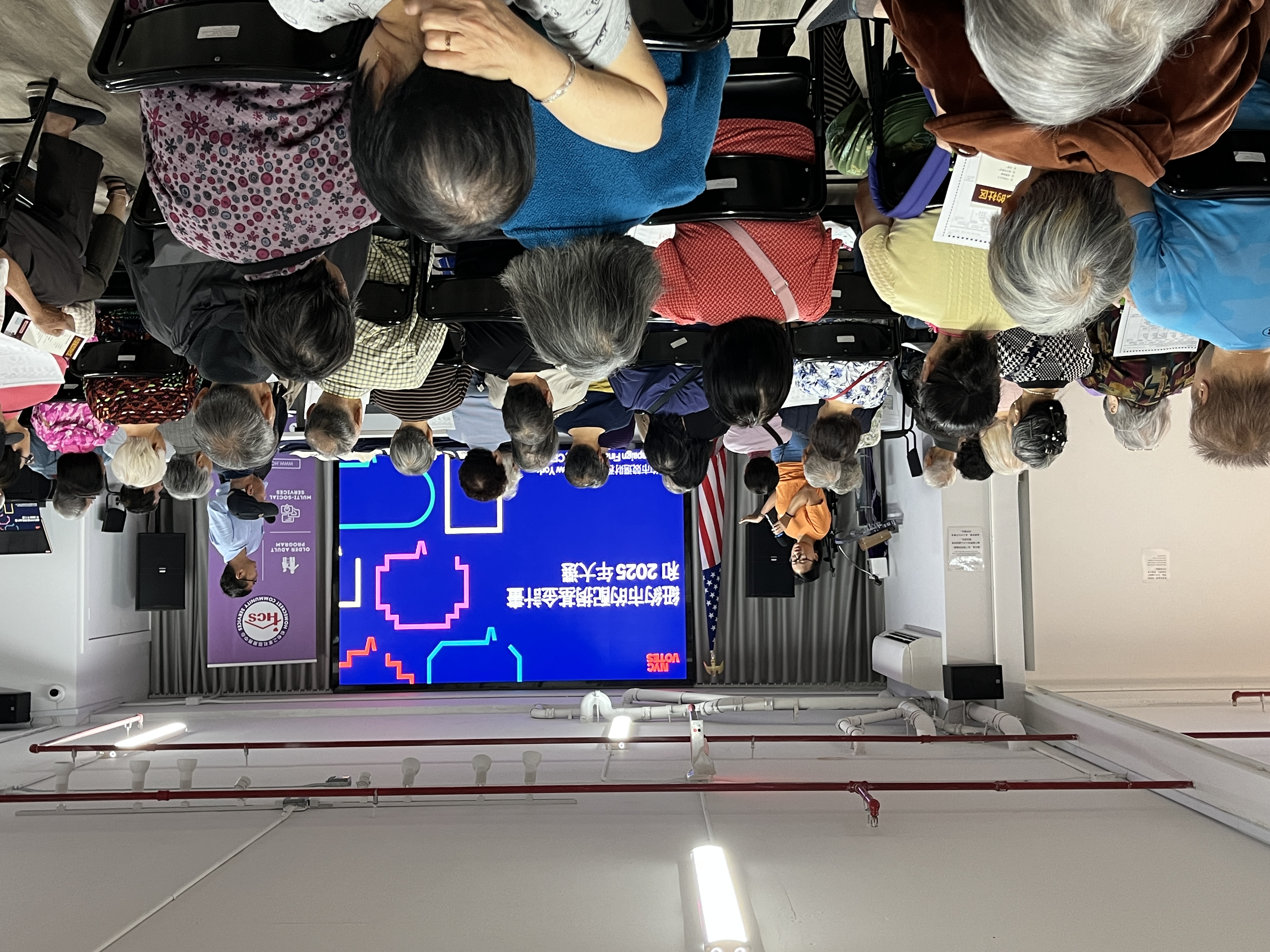
Перед тем как ньюйоркцы показали рекордную явку на выборах в прошлом году, группа китайских жителей Бруклина внимательно слушала семинар по избирательным правам в Общественном центре Бенсонхерста. Участники семинара отвечали на вопросы о гражданском участии на кантонском диалекте. Местные жители, глядя на холщовые сумки и держа в руках переведенные руководства для избирателей, соревновались в знаниях, чтобы получить призы от NYC Votes. Хотя многие уже зарегистрировались для голосования, местные жители пришли на семинар, чтобы узнать больше о доступных языковых ресурсах и средствах доступности на избирательных участках.
Сотрудничество между NYC Votes и этой местной организацией позволяет увидеть жизнь города с огромным многообразием языков, где 3,8 миллиона человек из 8 миллионов населения Нью-Йорка говорят дома не на английском языке, а в целом в городе каждый день звучат более 700 языков. И каждый из них должен иметь возможность голосовать на своем языке и получать надежную информацию о выборах.
Сотрудничество между NYC Votes и этой местной организацией позволяет увидеть жизнь города с огромным многообразием языков, где живут где 3,8 миллиона человек из 8 миллионов населения Нью-Йорка говорят дома не на английском языке, а в целом в городе каждый день звучат более 700 языков. И каждый из них должен иметь возможность голосовать на своем языке и получать надежную информацию о выборах.
В США в настоящее время нет языковых требований для участия в выборах, и язык, на котором говорят избиратели, не влияет на право голоса для граждан США. Для удовлетворения этой потребности NYC Votes осуществляет программы языковой поддержки для всех ньюйоркцев. Когда благодаря языковой поддержке больше людей получают доступ к голосованию, результаты голосования точно отражают интересы сообществ.
Когда благодаря языковой поддержке больше людей получают доступ к голосованию, результаты голосования точно отражают интересы сообществ.
В этом году состоятся выборы губернатора штата, и именно офис губернатора создал Управление языковой поддержки штата Нью-Йорк (New York State Office of Language Access). С 2022 года в штате Нью-Йорк действует требование об обязательном наличии устных переводчиков в агентствах, финансируемых штатом, и распространении переводов информационных документов для избирателей. Чтобы больше ньюйоркцев могли получить языковую поддержку во время выборов, городские агентства должны соблюдать общештатные и городские нормы.
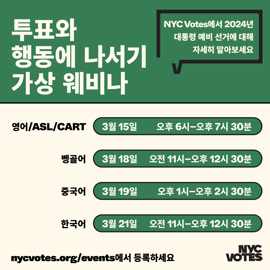 Переведенная на корейский язык листовка NYC Votes для президентских праймериз 2024 года, в которой приведена информация для избирателей и календарь выборов.
В рамках комплаенса Совет по финансированию избирательных кампаний (CFB, агентство, отвечающее за программу NYC Votes) соблюдает требования основных законов. Усилия NYC Votes по информированию избирателей непосредственно регулируются двумя законами о языковой поддержке — Законом о правах избирателей и местным законом № 48. Согласно местному закону № 30 государственные агентства города Нью-Йорка обязаны назначать координатора языковой поддержки, разработать План реализации языковой доступности (Language Access Implementation Plan, LAIP), предоставлять бесплатные языковые услуги (письменный и устный перевод), предлагать гражданам бесплатные услуги устного перевода для определенных языков, обучить персонал выполнению протоколов языковой поддержки, предоставлять данные и подавать жалобы.
Сантьяго Торрес, первый директор агентства по языковому доступу, всегда интересовался идеей языкового равенства. Этот интерес появился у него, когда в детстве он переводил для своей матери. Как и для многих ньюйоркцев, устный перевод нужной информации для родных был для него не работой, а частью повседневной жизни и взаимодействия с миром. Помня об этом опыте и учитывая количество жителей Нью-Йорка, связанных с другими языками, Торрес в 2024 году разработал для CFB План реализации языкового доступа (Language Access Implementation Plan), в котором описаны цели агентства по расширению доступа для всех избирателей, избирательных кампаний и спонсоров. В 2024 году в Нью-Йорке избиратели-иммигранты, в том числе новые американцы и люди с ограниченным владением английским языком, составляли 16,4% от общего числа избирателей. В своем плане Торрес объясняет, что в некоторых районах с самой низкой явкой обычно большинство жителей говорят в основном не на английском языке.
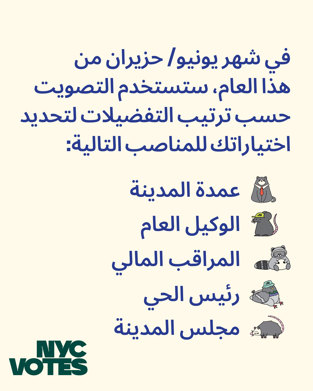 Образец графики NYC Votes в переводе на арабский язык Отдел языковой доступности CFB для объяснения рейтингового голосования.
Для решения этой проблемы системного неравенства NYC Votes координирует свои действия с многоязычными партнерами в местных общинах, чтобы привлечь к участию в выборах всех ньюйоркцев. Чтобы охватить все общины, NYC Votes сотрудничает, в частности, с вышеупомянутой партнерской организацией Homecrest Community Services из района Бенсонхерст, которая обслуживает кантонскоязычные общины Южного Бруклина. Для достижения этих целей в Плане действий определены шаги по адаптации информационных мероприятий и будущих инициатив к потребностям избирателей.
Торрес руководит стратегическими изменениями в агентстве, а Тендзин Янгки на конкретном уровне воплощает их в жизнь. Тендзин свободно владеет тремя языками и изучает еще два языка, чтобы стать полиглотом. Она объясняет свой интерес к языкам тем, что в подростковом возрасте она переехала из одной многоязычной среды в другую. Она видит цель своей работы в том, чтобы создавать качественные и хорошо разработанные переводные материалы, адаптированные для общин, которым они адресованы. Она считает, что «жизнь в многоязычном городе — это не проблема, а возможность создавать связи и соприкасаться с разными картинами мира и точками зрения».
Жизнь в многоязычном городе — это не проблема, а возможность создавать связи и соприкасаться с разными картинами мира и точками зрения.
Менеджер языковых услуг Янгки отвечает за перевод ресурсов для избирателей и расширение языковых услуг для того, чтобы создавать качественную информацию для избирателей и действенные материалы по гражданскому участию, которые укрепляют доверие в обществе. В этой работе ей помогают такие специалисты, как штатная переводчица испанского языка Karla Matute Parini (Карла Матуте Парини). При переводе материалов используется специальный процесс. Для повышения качества и согласованности переводов используются память прошлых переводов, отраслевые инструменты и передовые практики. Если вы читаете эту статью на своем языке, это значит, что ее перевели живые переводчики, а не искусственный интеллект.
Благодаря работе отдела языковой доступности руководство для избирателей NYC Votes переведено на 13 языков: арабский, бенгальский, китайский (упрощенное и традиционное письмо), французский, гаитянский креольский, хинди, корейский, польский, испанский, русский, урду и панджаби. Если вы хотите выдвинуть свою кандидатуру на выборную должность в городе Нью-Йорке, вам поможет Руководство для кандидатов, подготовленное Советом по финансированию избирательных кампаний Нью-Йорка (Campaign Finance Board, CFB) и доступное на 11 языках. Это документ о проведении избирательных кампаний, который обеспечивает кандидатам и избирателям равноправное участие в нашей демократии.
Торрес считает, что город влияет на то, как мы говорим на своих языках. Подчеркивая эти сложности, он говорит: «Язык — это не просто коммуникация, но и культурный обмен. В языке есть нюансы, которые определяют наш опыт».
Язык — это не просто коммуникация, но и культурный обмен. В языке есть нюансы, которые определяют наш опыт.
Янгки также отмечает, что в местных сообществах имеются определенные языковые особенности: «Это можно видеть на примере испанского языка, на котором говорят в Нью-Йорке, а также китайских диалектов или отдельного района, где говорят по-русски».
 Реклама NYC Votes в метро на китайском языке в 2022 году, в которой содержится информация о выборах и гражданском участии.
Поддерживая рост своей команды, Торрес стремится удвоить ее численность и ввести оценку уровня владения языками для новых сотрудников. Благодаря поддержке языкового разнообразия мы сможем больше общаться друг с другом. И это общение расширяется: агентство планирует добавить 33 новых языка в список услуг письменного перевода, а 46 языков будут доступны в индивидуальном порядке. Избиратели также могут получать услуги устного и телефонного перевода для более чем 100 языков, в том числе для американского жестового языка (American Sign Language, ASL). Подробнее о бесплатных языковых услугах в государственных учреждениях Нью-Йорка можно узнать на сайте Управления мэрии Нью-Йорка по делам иммигрантов (NYC Mayor’s Office of Immigrant Affairs).
Отдел языковой поддержки стремится учитывать языковые особенности во всей своей деятельности — на всех этапах каждого проекта, как при взаимодействии с общественностью, так и во внутренней работе. Торрес говорит: «В идеале цель в том, чтобы создавать просто контент, который перестает быть арабским, бенгальским или испанским».
Мы хотим повысить явку избирателей. И в то же время мы хотим, чтобы [ньюйоркцы] понимали, что здесь есть место для каждого.
В связи с этим важно напомнить, что на любых выборах вы имеете право принести на избирательный участок руководство для избирателей на своем языке. Вы также можете привести переводчика (друга, родственника или сотрудника избирательного участка), который поможет вам убедиться, что вы правильно проголосовали. Вы как полноправный избиратель также имеете право на безопасность: никто не может угрожать вам какими-либо действиями без соответствующего ордера.
Когда все ньюйоркцы смогут беспрепятственно голосовать, мы сможем избрать правительство, которое представляет нас и удовлетворяет потребности наших общин. Используя избирательные бюллетени, мы нарисуем красками наших многоязычных голосов яркий город, в котором мы все живем.